
Author: tackettroofingtx

  • Roof Insurance Claims in Texas: A Homeowner’s Guide

    Roof insurance claims in Texas can feel confusing, especially after hail, wind, or another major storm damages your home. Between inspections, deductibles, insurance adjusters, depreciation, supplements, and repair decisions, there can be a lot to understand. This guide explains the roof insurance claim process and what Texas homeowners can expect from the initial inspection through completing the roofing work.

    What happens when the insurance adjuster comes out? Why does the insurance estimate show depreciation? And what happens if your roofing contractor finds damage that wasn’t included in the original estimate?

    Understanding roof insurance claims in Texas before you file can make the process much easier and help you know what to expect at each step.

    At Tackett Roofing, we believe homeowners should understand what is happening to their home throughout the process. Here’s what Texas homeowners should know when dealing with roof damage and insurance.
    Step 1: Have the Roof Professionally Inspected

    After hail, high winds, or another severe storm, roof damage isn’t always obvious from the ground.

    Missing shingles are easy to spot, but storm damage can also include lifted or creased shingles, damaged flashing, hail impacts, damaged vents and accessories, and other issues that require a closer inspection.

    Before assuming you need a new roof—or that you need to file an insurance claim—start with a professional roof inspection to determine the condition of the roofing system.

    A professional inspection can document the condition of the roof and help you understand whether there appears to be storm-related damage worth discussing with your insurance company.

    Important: Your roofing contractor determines what roofing work is needed and what it will cost. Your insurance company determines whether that damage is covered under your policy.

    Step 2: Understand Your Deductible Before Filing

    Before filing a claim, check your homeowners insurance policy or contact your insurance company to determine your deductible.

    Texas homeowners may have a separate wind and hail deductible, and percentage-based deductibles can result in a much larger out-of-pocket expense than homeowners expect. The Texas Department of Insurance recommends understanding exactly what your deductible equals in dollars before deciding how to proceed with a claim.

    And despite what you may hear after a storm, your deductible cannot legally be waived by a roofing contractor in Texas. Contractors cannot absorb it, rebate it, or inflate an estimate to offset it.

    If someone tells you they’ll “eat your deductible,” that’s a reason to ask more questions—not a special deal.

    Step 3: Filing Roof Insurance Claims in Texas

    If you decide to file a claim, the homeowner should contact the insurance company directly.

    Keep a record of your claim number, the date the claim was filed, your adjuster’s name and contact information, and any documents or photographs you submit.

    The Texas Department of Insurance also recommends photographing the damage and recording when you first noticed it. Document the weather event, protect the property from additional damage when necessary, and keep receipts for temporary repairs.

    Step 4: The Insurance Adjuster Inspects the Property

    After the claim is filed, your insurance company will typically assign an adjuster to inspect the property.

    Whenever possible, we recommend coordinating the adjuster’s appointment with your roofing contractor.

    Why?

    Your roofer has already inspected the roof and can point out physical damage. They can also discuss roofing components and installation requirements, provide measurements and documentation, and answer construction-related questions.

    Texas Department of Insurance consumer guidance specifically notes that it’s a good idea to have your contractor present when the insurance adjuster looks at the damage.

    That does not mean your roofer is acting as your insurance adjuster or determining coverage. Those are separate roles.

    Step 5: Review the Insurance Estimate

    If the insurance company determines there is covered damage, you’ll generally receive an estimate outlining what it has included in the claim.

    Don’t be surprised if that estimate looks complicated.

    You may see terms such as:

    RCV — Replacement Cost Value

    The estimated cost to repair or replace the damaged property at current prices.

    ACV — Actual Cash Value

    The value of the damaged property after applicable depreciation.

    Depreciation

    A reduction in value generally related to factors such as age and condition.

    Deductible

    The portion of the covered loss that you’re responsible for paying.

    The way your roof is covered matters considerably. Some policies provide replacement-cost coverage, while others provide actual-cash-value coverage that can pay substantially less for an older roof.

    Step 6: Have Your Roofing Contractor Review the Scope of Work

    An insurance estimate and a roofing contractor’s scope of work don’t always look identical.

    Your contractor should determine what the roofing project actually requires. This may include materials, quantities, accessories, flashing, ventilation, applicable code requirements, and manufacturer installation requirements.

    If your contractor discovers legitimate additional work that the original insurance estimate didn’t include, the contractor can submit supporting documentation to the insurance company for review.

    The insurance carrier ultimately determines what it will or will not cover under the policy.

    What About Supplements?

    You’ll often hear the word “supplement” during an insurance restoration project.

    A supplement is essentially additional documentation concerning work or costs that weren’t included in the insurance company’s original estimate.

    For example, once work begins, your contractor may discover additional required materials or conditions that weren’t visible during the initial inspection.

    A contractor can provide estimates, photographs, measurements, invoices, and other construction documentation supporting the work being performed.

    However, Texas law draws an important line: a contractor performing the repairs cannot act as the homeowner’s public insurance adjuster or negotiate the insurance claim on the homeowner’s behalf.

    Why Did I Receive Two Insurance Checks?

    Homeowners with replacement-cost coverage may receive insurance proceeds in stages.

    The first payment may reflect the initial covered amount after depreciation and the deductible. After the contractor completes qualifying repairs and submits the required documentation, the insurance company may release recoverable depreciation according to the terms of your policy.

    That is why receiving an initial check for substantially less than the total roof replacement cost doesn’t necessarily mean something is wrong with the claim.

    Your specific payment process depends on your policy and claim.

    Does Insurance Have to Replace My Entire Roof?

    Not necessarily.

    Insurance coverage depends on your policy, the cause and extent of the damage, and the carrier’s determination of the covered loss.

    For example, the Texas Department of Insurance notes that an insurer might not pay to replace an entire roof simply because replacement shingles don’t perfectly match the existing shingles.

    That’s another reason good documentation matters. The condition of the existing roof, storm damage, repairability, roofing system, materials and required installation all need to be accurately documented.

    Be Careful After a Major Hailstorm

    Unfortunately, severe storms also bring an influx of contractors into affected neighborhoods.

    Before signing anything, ask who you’re doing business with.

    Look for an established company with insurance, verifiable reviews, and manufacturer credentials where applicable. Ask for a written scope of work and clear payment terms. A reputable contractor should also be willing to explain the project without pressuring you to sign immediately.

    And remember: a promise to waive your deductible isn’t a benefit. It’s illegal in Texas.

    Help With Roof Insurance Claims in Texas

    At Tackett Roofing, our job is to help you understand your roof and the roofing work involved in the insurance claim process.

    We can inspect the property, document roofing damage, and explain what we find. We can also develop a detailed scope of work, provide pricing, and meet with the insurance adjuster to discuss the physical roofing work. Once you’re ready to move forward, our team can complete the repairs or replacement according to the agreed scope.

    We don’t determine whether your insurance company owes for a loss, and we don’t act as your public insurance adjuster.

    What we will do is make sure you understand the roofing side of the process so you can make informed decisions about your home.

    If your San Antonio-area home has been affected by hail, wind, or another severe storm, contact Tackett Roofing to schedule a roof inspection.

    Tackett Roofing
    210-761-7663
    You handle life. We’ll Tackett From Here.
  • Converse TX Hailstorm: What to Check and How to Choose the Right Roofing Contractor

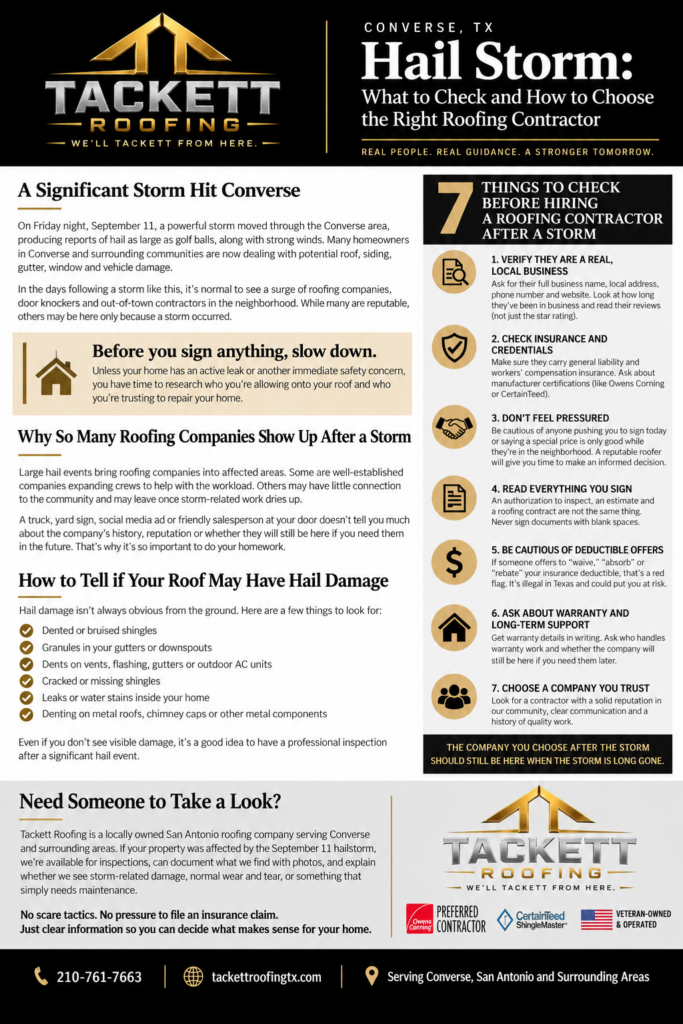
    The Converse TX hailstorm on September 11, 2026, brought large hail and strong winds through portions of the Converse area. Reports near Converse included hail approximately 1.5 inches in diameter, with some reports reaching golf-ball size. For homeowners, that can mean potential damage to roofing, gutters, siding, windows, outdoor equipment, and vehicles.

    But after a major hailstorm, there’s something else homeowners should be prepared for:

    The sudden arrival of roofing companies, door knockers, and contractors offering inspections and repairs.

    Many are reputable companies responding to an increased need for roofing services. Others may have little connection to the community and may leave the area once storm-related work slows down.

    So before you sign anything or choose a roofing contractor, slow down and do your homework.

    Unless your home has an active leak or another immediate safety concern, you generally have time to understand the condition of your roof, research the company you’re considering, and make an informed decision about your property.

    What Damage Can the Converse TX Hailstorm Cause?

    Hail damage isn’t always obvious from the ground. In fact, a roof can appear perfectly normal to a homeowner while still having damage that should be evaluated more closely.

    Depending on the size of the hail, wind speed, roofing material, age of the roof, and direction of the storm, hail can affect different roofing systems in different ways.

    Some things to look for after the Converse hailstorm include:

    • Dented, bruised, cracked, or missing shingles
    • Excessive shingle granules collecting in gutters or near downspouts
    • Dents in gutters, downspouts, vents, flashing, or other metal components
    • Damage to chimney caps
    • Dents or impact marks on metal roofing
    • Damage to siding, window screens, fencing, or outdoor AC equipment
    • Water stains or signs of leaking inside the home

    Do not climb onto your roof to look for damage yourself. A roof can be slippery or damaged after severe weather, and many signs of hail damage require a closer inspection to identify correctly.

    Why Roofing Companies Show Up After a Converse TX Hailstorm

    Significant hailstorms create a large amount of legitimate roofing work in a relatively small geographic area.

    Naturally, roofing companies move crews and salespeople into affected neighborhoods to help meet that demand.

    Some may be established local contractors. Some may be reputable companies from other Texas markets. And others may have arrived specifically because a storm occurred and could move on when the work dries up.

    That’s why a truck, yard sign, Facebook ad, postcard, or friendly salesperson standing at your front door shouldn’t be the only reason you choose a contractor.

    The company you choose after the storm should still be there when the storm is long gone.

    7 Things to Check Before Hiring a Roofing Contractor After a Storm

    1. Verify That You’re Dealing With a Real, Established Business

    Ask for the company’s full business name, phone number, website, and business address.

    Then do your own research.

    Look at the company’s online presence and reviews. Don’t look only at the number of stars — read the reviews. Look at photos of completed projects and see whether customers describe actual experiences working with the company.

    You can also search the company’s name independently instead of relying only on information provided by the salesperson.

    2. Ask About Insurance and Credentials

    Ask the contractor whether they carry appropriate insurance for their roofing operations.

    You can also ask about manufacturer certifications or credentials.

    For example, roofing manufacturers may have requirements contractors must meet before receiving certain credentials or being able to offer enhanced manufacturer warranty options.

    Credentials aren’t the only factor you should consider, but they can provide another layer of information when evaluating a roofing company.

    3. Don’t Let Anyone Pressure You Into Signing Immediately

    After a storm, homeowners can feel like they need to make a roofing decision immediately.

    In most situations, you don’t.

    Be cautious if someone tells you:

    “You have to sign today.”

    “This offer is only available while we’re in the neighborhood.”

    Or anything else designed to make you feel like you don’t have time to research the company.

    A reputable contractor should be comfortable explaining what they found, documenting it, answering your questions, and allowing you to make an informed decision.

    4. Understand What You’re Signing

    This is extremely important after a storm.

    An authorization to inspect, an estimate, an insurance contingency agreement, and a roofing contract are not necessarily the same thing.

    Before signing anything, read the entire document and ask:

    What am I authorizing by signing this?

    Does this obligate me to use this contractor?

    Under what circumstances can this agreement be canceled?

    What happens if insurance approves only a repair or partial replacement?

    Never sign a document with blank spaces that will be filled in later.

    The Texas Department of Insurance specifically advises homeowners to understand documents before signing and warns that something presented as permission to inspect or provide an estimate may actually be a contract. Texas Department of Insurance — Contractor Scam Warning Signs

    5. Be Very Cautious of Anyone Offering to “Cover” Your Insurance Deductible

    Your insurance deductible is part of your insurance claim.

    If a contractor tells you they’ll waive, absorb, rebate, reimburse, or otherwise make your deductible disappear, that’s a major red flag.

    Texas law restricts contractors from paying, waiving, absorbing, rebating, or otherwise assisting an insured person in avoiding payment of an applicable property insurance deductible.

    The Texas Department of Insurance specifically advises homeowners not to work with a contractor who offers to waive their deductible. Texas Department of Insurance — Avoid Contractor Scams After a Storm

    6. Ask About the Workmanship Warranty — and Who Will Honor It

    A long warranty doesn’t mean much if you can’t reach the company later.

    Ask:

    How long is the workmanship warranty?

    Is the warranty provided in writing?

    Who handles a problem if I have a leak later?

    Does the warranty transfer if I sell my home?

    What manufacturer warranty comes with the roofing system?

    And perhaps most importantly:

    Will this company still be working in my community if I need them two years from now?

    The answer matters.

    7. Choose a Roofing Company You Trust

    Price matters, but it shouldn’t be the only factor in choosing who works on your home.

    Look for clear communication, documentation, transparency, appropriate insurance, established business information, manufacturer credentials when applicable, and a contractor who is willing to explain your options.

    You should feel comfortable asking questions.

    And you should never feel pressured into filing an insurance claim simply because someone inspected your roof.

    Do You Automatically Need to File an Insurance Claim After the Converse TX Hailstorm?

    No.

    A hailstorm occurring in your neighborhood doesn’t automatically mean your roof needs replacement or that you need to file an insurance claim.

    The first step can simply be determining whether there is damage.

    A roofing contractor can inspect the roof and document visible conditions. If storm-related damage is present, you can then decide whether contacting your insurance carrier makes sense based on your particular circumstances.

    Your insurance company ultimately determines whether damage is covered under your policy.

    A roofing contractor does not determine insurance coverage.

    What If Your Roof Only Needs a Repair?

    That’s okay too.

    Not every storm-damaged roof requires complete replacement.

    Depending on what is found during an inspection, the appropriate solution could be maintenance, a localized repair, replacement of damaged components, or a larger roofing project.

    A good inspection shouldn’t begin with a predetermined outcome.

    It should begin with:

    What actually happened to this roof?

    Need a Roof Inspection After the Converse TX Hailstorm?

    Tackett Roofing is a locally owned San Antonio roofing company serving Converse and surrounding communities.

    If your property was affected by the September 11 hailstorm, we’re available to inspect your roof, photograph what we find, and explain the condition of the roofing system.

    If we see storm-related damage, we’ll show you.

    If we see normal wear and tear, we’ll tell you.

    If something simply needs maintenance or repair, we’ll explain that too.

    No scare tactics. No pressure to file an insurance claim. Just clear information so you can make the decision that makes sense for your home.

    Tackett Roofing is an Owens Corning Preferred Contractor and CertainTeed ShingleMaster, providing residential and commercial roofing services throughout the San Antonio area.

    Tackett Roofing
    210-761-7663

    You handle life. We’ll Tackett From Here.
  • Roof Damage After a Storm in Boerne, TX: What Homeowners Should Check

    Strong winds, hail, and heavy rain are common in Boerne and throughout the Texas Hill Country. If severe weather recently moved through your neighborhood, scheduling a roof inspection in Boerne can help you find damage that may not be visible from the ground. Homeowners can also check the National Weather Service Austin/San Antonio for local forecasts and severe weather information.

    The tricky part is that roof damage isn’t always easy to see.

    You don’t have to have missing shingles or water dripping from the ceiling for your roof to have a problem. Sometimes wind loosens a shingle or damages the seal underneath it. Flashing—the metal used around chimneys, walls, and other areas of the roof—can also become loose or damaged.

    Here are some simple things you can look for after a storm and when it may be worth having your roof professionally inspected.

    What Can You Check From the Ground?

    First, don’t climb onto your roof to inspect it yourself. You can spot quite a few warning signs while keeping your feet safely on the ground.

    Walk around your home and look for:

    • Missing, lifted, or damaged shingles
    • Pieces of shingles or roofing material in your yard
    • Tree branches that fell onto or scraped the roof
    • Loose or damaged gutters
    • Dents in gutters or other metal around the home
    • Metal around the roof that looks loose or out of place
    • New water stains on your ceilings or walls
    • Water appearing around a fireplace, window, or exterior wall

    You can also step farther away from your house and look at the roof from different angles. If an area suddenly looks different than it did before the storm, it’s worth taking a closer look.

    Can Wind Damage a Roof Without Blowing Off Shingles?

    Yes. This is actually one of the easiest types of roof damage for a homeowner to miss.

    A strong wind can lift a shingle without completely blowing it off the roof. The shingle may even settle back down afterward and look perfectly normal from your yard.

    The problem is that lifting can weaken or break the seal that helps hold the shingle in place. That can make it easier for wind or rain to get underneath it during the next storm.

    That’s one reason you may not notice a roof leak immediately after severe weather.

    During a storm damage roof inspection in Boerne, we check for these less-obvious problems in addition to looking for missing shingles.

    What Does Hail Damage Look Like?

    Hail damage can look different depending on the type of roof you have.

    On a typical asphalt-shingle roof, hail can knock away some of the small protective granules covering the shingles or damage the shingle underneath.

    Tile roofs may have cracked or broken tiles.

    Metal roofs can have dents, but we also check areas such as seams, screws, flashing, vents, and other places where damage could eventually allow water in.

    The size of the hail isn’t the only thing that matters. Wind speed, the direction of the storm, the age of your roof, and the roofing material can all make a difference.

    Some Roof Leaks Don’t Start With the Shingles

    When homeowners think about a leaking roof, they naturally think about damaged shingles.

    But leaks can start in several other places.

    We often pay special attention to areas around:

    • Chimneys
    • Plumbing pipes
    • Roof vents
    • Skylights
    • Valleys where two sections of the roof meet
    • Areas where the roof meets a wall
    • Previous roof repairs

    These areas usually have flashing, sealants, or other materials designed to keep water out. If something becomes loose or damaged during a storm, water may find its way underneath the roof.

    Sometimes fixing one of these smaller areas is all that’s needed.

    Check Your Gutters Too

    Don’t forget to look at your gutters after a storm.

    Your gutters help carry rainwater off the roof and away from your home. If they’re loose, damaged, clogged, or tilted the wrong way, water may not drain properly.

    Look for gutters that are:

    • Pulling away from the house
    • Dented
    • Sagging
    • Overflowing when it rains
    • Leaking at the joints
    • Holding water instead of draining

    You may also notice pieces of roofing material or an unusual amount of shingle granules collecting in the gutters.

    Does Storm Damage Mean I Need a New Roof?

    No. Having your roof inspected does not mean you’re signing up for a roof replacement.

    Sometimes a roof simply needs maintenance or a small repair. Other times there may be several damaged areas that need attention. There are also situations where the damage or overall condition of the roof makes replacement the better option.

    The important thing is figuring out what your roof actually needs.

    At Tackett Roofing, we don’t believe every roof problem should turn into a roof replacement.

    If we believe a repair makes sense, we’ll tell you. If we find something more serious, we’ll show you what we’re seeing and explain your options so you can make an informed decision about your home.

    When Should I Schedule a Roof Inspection in Boerne?

    You don’t necessarily need to call a roofer every time it rains.

    But it’s a good idea to have your roof checked if your home experienced a significant hail or windstorm or if you notice something that wasn’t there before.

    Pay particular attention to:

    • A new roof leak
    • Missing or loose shingles
    • Water stains on a ceiling
    • A tree or large branch hitting the roof
    • Loose metal or flashing
    • Damaged gutters
    • Roofing material in your yard
    • A previously repaired area leaking again

    Catching a small problem early can sometimes prevent a much more expensive problem later.

    What Happens During a Roof Inspection in Boerne?

    If you’ve never had your roof inspected, there’s no reason to feel intimidated by the process.

    We’re simply trying to determine the condition of the roof and whether anything needs attention.

    Depending on your type of roof, we’ll check the roofing material itself along with the areas most likely to develop leaks. That includes things like vents, flashing, valleys, chimneys, exposed screws or nails, previous repairs, and other areas where water could get underneath the roof.

    If we find a problem, we’ll explain what it is, where it is, and what we recommend doing about it.

    You shouldn’t need to understand roofing terminology to understand what’s happening with your own home.

    Looking for a Roof Inspection in Boerne, TX?

    Tackett Roofing serves homeowners in Boerne, San Antonio, and surrounding Texas Hill Country communities.

    We provide roof inspections, roof repairs, roof replacements, storm-damage services, gutters, metal roofing, tile roofing, and commercial roofing.

    Tackett Roofing is an Owens Corning Preferred Contractor and CertainTeed ShingleMaster.

    Whether your roof needs a simple repair or something more involved, we’ll explain what we find and help you understand your options.

    Think Your Roof May Have Been Damaged in a Storm?

    If your Boerne home recently experienced hail, high winds, or severe weather and you’re concerned about your roof, scheduling a roof inspection in Boerne can help you understand whether anything needs attention. Give Tackett Roofing a call, and we’ll take a look.

    Tackett Roofing
    210-761-7663

    We’ll take a look, explain what we see, and let you know if anything needs attention.

    You handle life. We’ll Tackett From Here.

    Frequently Asked Questions About Storm Damage in Boerne

    Can my roof have storm damage even if it isn’t leaking?

    Yes. Some damage doesn’t cause an immediate leak. A loose shingle, damaged flashing, or another small opening may become a problem during a later rainstorm.

    Can wind damage a roof without removing shingles?

    Yes. Wind can lift a shingle enough to weaken its seal without completely blowing it off the roof.

    Does having my roof inspected mean I’ll need to replace it?

    No. An inspection is simply a way to find out what’s going on. Depending on what we find, your roof may need nothing at all, some maintenance, a repair, or—in some cases—replacement.

    Should I get on my roof and check it myself?

    We don’t recommend it. Roofs can be slippery, and storm-damaged materials may be loose. Check what you can safely see from the ground and leave the rooftop inspection to someone with the proper equipment.

    Does Tackett Roofing repair roofs in Boerne?

    Yes. Tackett Roofing provides roof repair in Boerne, TX, along with inspections, roof replacement, storm-damage services, gutters, metal roofing, tile roofing, and commercial roofing.

  • What to Check on Your Roof After a San Antonio Wind & Rainstorm

    Strong winds and heavy rain can put your roof to the test. After a severe storm moves through San Antonio, some roof damage is easy to spot. Other problems can go unnoticed until the next heavy rain.

    Missing shingles, lifted roofing materials, damaged flashing and small openings can eventually allow water into your home.

    Here are several things homeowners can safely look for after a storm.

    1. Look for Missing or Lifted Shingles

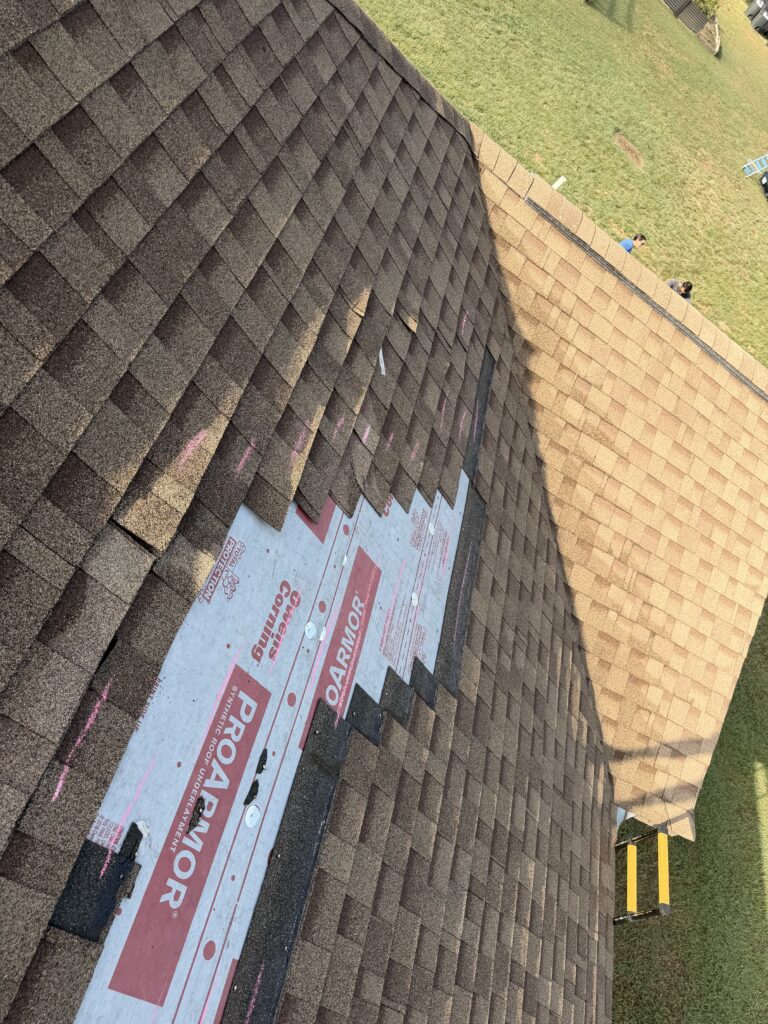
    Missing shingles found during a recent Tackett Roofing storm-damage inspection in the San Antonio area.

    Strong winds can loosen, lift or completely remove shingles.

    Walk around your property and look at your roof from the ground. Pay particular attention to roof edges, ridges and areas around vents or other penetrations.

    You may also find pieces of shingles or other roofing materials in your yard.

    Even if a shingle hasn’t completely blown off, wind can break its seal and leave it vulnerable to future storms.

    If you suspect wind damage, having your roof professionally inspected can help identify problems that may not be visible from the ground. The Texas Department of Insurance also provides helpful information for homeowners about making repairs after a storm.

    2. Check Ceilings and Walls for Water Spots

    Not every roof leak immediately produces dripping water.

    Look inside your home for:

    • New ceiling stains
    • Discoloration around walls or windows
    • Damp drywall
    • Bubbling or peeling paint
    • Musty odors
    • Water around attic penetrations

    A small water spot after heavy rain shouldn’t be ignored. Finding the source early can help prevent additional damage. If you notice signs of water getting inside, learn more about our roof leak repair services in San Antonio.

    3. Look Around the Attic

    If your attic is safely accessible, check it after a heavy storm.

    Look for wet decking, damp insulation, water stains or areas where daylight is visible.

    Remember that the location of water inside the attic isn’t necessarily directly below the roof damage. Water can travel along decking, rafters and other building materials before becoming visible.

    4. Take a Look From the Ground

    After strong winds, take a look at your roof from the ground. You don’t need to know exactly what every part of your roofing system is called.

    Look for anything that appears different than it did before the storm. This might include a vent that looks crooked, loose material, pieces of metal sticking up, or an area of the roof that simply doesn’t look right.

    You can also walk around your yard and look for shingles, pieces of roofing material or other debris that may have come off during the storm.

    Don’t climb onto the roof to investigate. If you notice something unusual, a professional roof inspection can determine whether anything needs to be repaired.

    5. Don’t Forget About Trees and Debris

    Branches and flying debris can damage roofing materials during a storm.

    Even when there isn’t an obvious hole in the roof, an impact can crack or damage shingles, tile or other roofing components.

    If a large branch landed on your roof, it’s a good idea to have the area inspected.

    Can Storm Damage in San Antonio Cause Roof Problems Without a Leak?

    Yes.

    One of the biggest misconceptions about storm damage is that you’ll immediately see water inside your home.

    A roof can have missing shingles, lifted shingles, damaged flashing or compromised seals without leaking right away.

    That’s why an inspection can be worthwhile after particularly strong winds—even when everything looks normal from the ground.

    Should You Climb on Your Roof to Check for Storm Damage?

    We don’t recommend it.

    Roof surfaces can be slippery after rain, and wind-damaged roofing materials may not be secure. Tile roofs can also be damaged simply by walking in the wrong areas.

    Most homeowners can perform an initial visual inspection safely from the ground.

    If something doesn’t look right—or you simply want peace of mind—have a roofing professional take a closer look.

    What If Your Roof Is Fine?

    Then that’s exactly what you should be told.

    A storm doesn’t automatically mean your roof needs repairs or replacement.

    At Tackett Roofing, we inspect the roof, document what we find and explain our recommendations. If your roof came through the storm without damage, we’ll tell you that too.

    Need a Roof Inspection After a San Antonio Storm?

    If you’ve noticed missing shingles, a roof leak or possible wind damage, don’t wait for the next heavy rain to find out whether there’s a problem.

    Tackett Roofing provides free roof inspections throughout San Antonio and surrounding communities.

    You handle life. We’ll Tackett From Here.

  • Roof Leak Repair in San Antonio

    When you need roof leak repair, acting quickly can help prevent a small water intrusion from turning into damaged insulation, decking, drywall, flooring, or other costly repairs. In San Antonio and the surrounding Texas Hill Country, roof leaks are especially common after heavy rain, high winds, hail, and severe thunderstorms.

    If you’ve discovered water coming into your home, acting quickly matters. However, a leak doesn’t automatically mean you need a new roof. In many cases, an experienced roofing contractor can identify the source and make a targeted repair.

    Here’s what San Antonio homeowners should know about roof leaks, how to protect their property from further damage, and when it’s time to call a professional for roof leak repairs.

    What Should You Do First When Your Roof Is Leaking?

    If water is actively entering your home, your first priority is limiting additional damage.

    Move furniture, electronics, and valuables away from the affected area and place a container underneath active dripping water. If the ceiling is bulging or saturated, avoid standing directly underneath it.

    When it is safe to do so, take photos or video of the visible water damage. Documenting what you see before cleanup or repairs begin can be helpful, particularly when the leak follows a storm.

    Once the immediate area is protected, contact a roofing contractor for an inspection.

    One important thing to remember is that where you see water inside your home isn’t necessarily where the roof is leaking. Water can travel along roof decking, rafters, pipes, and other building materials before becoming visible inside the home.

    That’s why simply looking at the area directly above a ceiling stain may not reveal the actual source.

    Protecting Your Home From Further Damage

    When a storm or roof failure leaves part of your home exposed, preventing additional water intrusion is an important next step.

    Waiting for a permanent roof repair while rain continues to enter the structure can turn a relatively contained problem into damaged decking, insulation, drywall, flooring, and personal property.

    Tackett Roofing can provide temporary emergency roof tarping and other reasonable mitigation measures when conditions allow. Properly installed temporary protection can help reduce additional water intrusion until the roof can be fully evaluated and permanent repairs can be completed.

    What If the Roof Damage May Be an Insurance Claim?

    If your roof damage may involve an insurance claim, taking reasonable steps to prevent further damage is especially important.

    Homeowners insurance policies commonly include duties after a loss that require homeowners to take reasonable measures to protect the property from additional damage. Exact requirements vary by policy and carrier, so homeowners should review their individual policy and communicate with their insurance company about the loss. The Texas Department of Insurance also recommends documenting damage and making reasonable temporary repairs to protect your property from further damage.

    Temporary roof tarping is one way to help mitigate additional damage when the roofing system has been compromised.

    When it is safe to do so, take photos or video before temporary repairs are performed. Keep documentation of emergency work and receipts for expenses related to protecting the property.

    Tackett Roofing can document visible roofing conditions with photos and explain the temporary measures performed.

    Temporary tarping is intended to mitigate further damage. It is not a permanent roof repair.

    If your roof has been damaged by hail, wind, falling debris, or another storm event, don’t wait for the next rain to discover how exposed your home may be.

    What Causes Roof Leaks in San Antonio?

    South Texas roofs take a beating throughout the year. Intense heat and sun exposure can be followed by thunderstorms, strong winds, hail, and periods of heavy rain.

    Some of the most common sources of roof leaks include:

    • Missing, lifted, or damaged shingles
    • Hail or wind damage
    • Failed or improperly installed flashing
    • Damaged pipe boots and roof penetrations
    • Exposed or backed-out fasteners
    • Deteriorated sealants
    • Sidewall and roof-to-wall flashing problems
    • Valley damage
    • Damaged or deteriorated underlayment
    • Improper previous repairs
    • Aging roofing materials

    Finding the actual cause matters. Simply applying sealant to the area where water appears without correcting the underlying problem may only provide a temporary fix—or may not solve the problem at all.

    Skylights and Chimneys Are Common Roof Leak Areas

    Skylights and chimneys are two areas we pay close attention to when investigating a roof leak. Both create openings and transitions in the roofing system, which means they rely heavily on properly installed flashing and surrounding roofing materials to keep water out.

    A leak around a chimney doesn’t necessarily mean the chimney itself is the problem. Water can enter through damaged or improperly installed step flashing, counter flashing, deteriorated sealants, problems with the chimney cap or masonry, or the roofing materials surrounding the chimney.

    Skylight leaks can be similar. The problem may come from the skylight itself, but it can also originate from failed flashing, deteriorated seals, damaged roofing materials, or improper installation around the skylight.

    This is another reason accurately diagnosing a roof leak matters. Simply applying caulk or sealant around a chimney or skylight may temporarily hide the symptom without correcting the actual source of the water intrusion.

    Does a Roof Leak Mean You Need a New Roof?

    Not necessarily.

    A roof leak can often be repaired without replacing the entire roofing system. The right recommendation depends on the location and cause of the leak, the age and overall condition of the roof, the extent of any damage, and whether the problem is isolated or occurring throughout the roofing system.

    For example, damaged flashing around one wall, chimney, skylight, or penetration may require a relatively localized repair. A roof with widespread storm damage, deteriorated materials, or multiple active problem areas may require a different approach.

    A professional roof inspection should determine why the roof is leaking before recommending what should be done about it.

    Why Small Roof Leaks Shouldn’t Be Ignored

    One of the biggest mistakes homeowners can make is waiting because a leak appears minor or stops when the rain stops.

    Water intrusion can affect much more than the visible ceiling stain. Over time, moisture may damage:

    • Roof decking
    • Insulation
    • Drywall and ceilings
    • Interior paint and finishes
    • Wood framing
    • Flooring and personal belongings
    • Electrical components

    Moisture can also create conditions that allow mold or mildew to develop.

    Catching a problem early can sometimes make the difference between a manageable roof repair and a much larger project.

    And remember: a leak that stops when the rain stops hasn’t necessarily been fixed.

    Can You Find a Roof Leak Yourself?

    Homeowners can sometimes spot obvious warning signs, but climbing onto the roof isn’t necessary and can be dangerous—especially after a storm or when roofing materials are wet.

    From the ground, you may be able to see missing shingles, displaced roofing material, debris damage, or visibly damaged flashing.

    Inside an attic that can be safely accessed, water stains, damp decking, or moisture may provide additional clues.

    However, locating a roof leak can be surprisingly difficult. The place where water enters the roofing system and the place where it appears inside your home can be several feet apart.

    A professional roof inspection allows the roofing materials, flashings, penetrations, valleys, vents, skylights, chimneys, transitions, and surrounding areas to be evaluated together.

    What About Roof Leaks After a San Antonio Storm?

    If a leak begins after hail, strong winds, or a severe thunderstorm, there may be damage elsewhere on the roof that isn’t immediately visible.

    Even if you only notice one leak, an inspection can help determine whether the problem is isolated or part of broader storm damage.

    Take photos of any visible interior water damage and note approximately when you first noticed the problem. If storm damage is found, that documentation may also be useful if you decide to contact your insurance company.

    Avoid assuming that every storm-related leak automatically requires an insurance claim. The first step should be understanding what actually happened to the roof.

    Roof Leak Repair vs. Roof Replacement

    A reputable roofing contractor should be able to explain whether repairing the affected area makes sense or whether the condition of the overall roof changes the recommendation.

    At Tackett Roofing, we believe homeowners should understand what is wrong with their roof, what their options are, and why a particular repair or replacement is being recommended.

    Sometimes the appropriate solution is a roof replacement. In other cases, a targeted repair may solve the problem. When the roof is actively allowing water into the home, the immediate priority may simply be protecting the property with temporary measures until a permanent solution can be completed.

    The goal should be solving the actual problem—not selling a homeowner more roofing than they need.

    Looking for Roof Leak Repair in San Antonio?

    If you’ve noticed a ceiling stain, active roof leak, leaking skylight or chimney, missing shingles, damaged flashing, storm damage, or another sign of roof trouble, Tackett Roofing can inspect the roofing system and help determine the source of the problem.

    We provide roof inspections, roof repairs, storm damage assessments, and emergency roof tarping throughout San Antonio and surrounding communities.

    We’ll document what we find, explain your options, and recommend a solution based on the actual condition of your roof.

    Need someone to take a look at your roof? Contact Tackett Roofing to schedule a roof inspection.

    You handle life. We’ll Tackett From Here.

    Frequently Asked Questions About Roof Leaks

    How quickly should I have a roof leak inspected?

    As soon as reasonably possible. Even if the leak stops when the rain stops, the underlying problem may remain and allow water to enter again during the next storm.

    Can Tackett Roofing tarp a leaking or storm-damaged roof?

    When conditions allow, Tackett Roofing can provide temporary emergency roof tarping to help protect damaged areas from additional water intrusion until permanent repairs can be completed. Tarping is a temporary mitigation measure and is not a permanent roof repair.

    Does homeowners insurance require me to prevent further damage?

    Homeowners insurance policies commonly require policyholders to take reasonable steps to protect their property from additional damage after a loss. Requirements vary by policy and carrier, so review your policy and communicate with your insurance company about your specific situation.

    Why is my roof leaking around my chimney?

    Chimney leaks can originate from several areas, including step flashing, counter flashing, sealants, masonry, the chimney cap, or surrounding roofing materials. The source should be identified before deciding how the area should be repaired.

    Why is my skylight leaking?

    A leaking skylight doesn’t always mean the skylight itself has failed. Water may be entering through the flashing, seals, surrounding roofing materials, or another area higher on the roof before reaching the skylight opening.

    Can a roofer repair a leak during an inspection?

    It depends on the cause of the leak and the materials and work required. Some minor issues may be addressed quickly, while others require materials, a larger repair area, or additional evaluation.

    Why does my roof only leak during heavy rain?

    Wind-driven rain can expose vulnerabilities that don’t leak during lighter rainfall. Flashing, valleys, penetrations, sidewalls, skylights, chimneys, transitions, and other areas may need to be inspected when a leak only appears during certain weather conditions.

    How much does roof leak repair cost in San Antonio?

    The cost depends on the cause and extent of the problem. A small flashing or penetration repair is very different from a repair involving damaged decking or a larger section of roofing. An inspection is the best way to determine the appropriate repair and its cost.

    Should I call my insurance company when my roof starts leaking?

    Not automatically. If the leak may have resulted from hail, wind, or another potentially covered event, documenting the damage and determining its likely cause can help you make a more informed decision about whether to contact your insurance carrier.

  • Roof Maintenance in San Antonio: Why Routine Care Matters

    Most homeowners know they need to change the oil in their car. You don’t wait for the engine to fail before doing basic maintenance. You take care of the small things along the way because routine maintenance can help prevent bigger, more expensive problems later.

    Your roof really isn’t that different.

    A roof is one of the biggest investments in your home, yet it’s also one of the easiest things to forget about. It’s up there doing its job every day through the San Antonio heat, intense Texas sun, wind, rain, hail and sudden temperature changes.

    Because you don’t see it every day, it’s easy to assume everything is fine until water starts showing up inside the house.

    By then, a small roofing issue may have already become a much larger repair.

    Roof Maintenance Is Preventive Maintenance

    Think about your vehicle again.

    An oil change doesn’t mean there’s something wrong with your engine. You do it to help keep something from going wrong.

    Routine roof maintenance works the same way.

    Over time, normal exposure to the elements can cause small issues such as:

    • Exposed or backed-out nails
    • Cracked or deteriorating sealant
    • Loose or damaged flashing
    • Damaged or missing shingles
    • Debris collecting in valleys
    • Problems around vents and other roof penetrations
    • Tree limbs rubbing against roofing materials
    • Minor areas where water could eventually enter

    Individually, these issues may not mean you need a new roof. In many cases, they’re simply maintenance items.

    The problem is what can happen when they’re ignored.

    A Small Roof Problem Can Become an Expensive One

    A small opening around flashing or a roof penetration may not look serious from the outside.

    But once water has a path underneath the roofing system, it can potentially affect the roof decking, insulation, ceilings, drywall and other parts of your home.

    That’s why waiting until you see a ceiling stain isn’t the best way to determine whether your roof needs attention.

    A roof leak can begin before you can see evidence of it from inside your home.

    Routine inspections give you an opportunity to identify potential problems earlier, when they may be easier and less expensive to address.

    It’s the same reason you don’t wait for your car engine to start smoking before checking the oil.

    San Antonio Weather Is Hard on Roofing Systems

    Roof maintenance is particularly important in South Texas.

    Roofs in the San Antonio area are exposed to intense sunlight and heat for much of the year. Add thunderstorms, high winds, hail and rapid weather changes, and your roofing system has a lot working against it.

    Even when a storm doesn’t cause enough damage to require a roof replacement, it can still affect shingles, flashing, vents, sealants and other roofing components.

    And storms aren’t the only concern.

    Trees can rub against shingles. Sealants can deteriorate. Fasteners can become exposed. Debris can collect in valleys. Flashing can loosen over time.

    None of those things automatically mean you have a bad roof.

    They mean your roof needs to be maintained.

    Maintenance Doesn’t Mean You Need a New Roof

    This is an important distinction.

    Finding something during a roof inspection does not automatically mean you need a roof replacement.

    Sometimes a roof simply needs maintenance.

    At Tackett Roofing, we believe homeowners should understand the actual condition of their roof and what their options are.

    If something can reasonably be maintained or repaired, we’ll explain that. Sometimes a targeted roof repair is all that’s needed to address the problem and help protect the surrounding roofing system.

    If there is more significant damage or deterioration, we’ll explain that too.

    The goal isn’t to turn every inspection into a roof replacement.

    The goal is to help you take care of the roof you already have.

    How Often Should You Have Your Roof Inspected?

    Regular roof inspections are an important part of preventive maintenance.

    The National Roofing Contractors Association (NRCA) provides homeowner guidance on routine roof inspections and maintenance, including checking for issues such as damaged or missing shingles, deteriorated flashing and other visible signs of roofing problems.

    NRCA homeowner guidance discusses inspecting a roof twice a year, typically in the spring and fall.

    It is also a good idea to have your roof evaluated after significant hail, high winds or severe weather, especially if you’re concerned about possible storm damage.

    For San Antonio homeowners, that can be especially important given the combination of intense heat, strong sunlight and severe storms our roofs experience.

    That doesn’t mean you should climb onto the roof yourself.

    Roofing systems can be steep, slippery and dangerous. Walking in the wrong areas can also damage certain roofing materials.

    A professional roof inspection allows someone who knows what to look for to evaluate the roofing system and identify areas that may need attention.

    What Is a Roof Tune-Up?

    Think of a roof tune-up as preventive maintenance for your roofing system.

    Just like an oil change gives a technician an opportunity to service your vehicle and spot potential problems before they become bigger ones, a roof tune-up focuses on smaller maintenance items that can help keep your roof doing its job.

    At Tackett Roofing, we start by inspecting the roof and looking for areas that may need attention.

    Depending on the roofing system and its condition, a roof tune-up may include:

    • Sealing exposed nail heads and fasteners
    • Checking and resealing areas around roof penetrations where appropriate
    • Inspecting flashing around walls, chimneys, vents and other vulnerable areas
    • Checking for loose, damaged or missing shingles
    • Removing minor debris from valleys and other critical drainage areas
    • Identifying tree limbs or other conditions that may be damaging the roof
    • Looking for signs of deterioration, previous repairs or potential water-entry points
    • Documenting areas that may require additional repair beyond routine maintenance

    Not every roof needs the same maintenance, which is why we inspect the roof first rather than treating every home the same.

    If we find something that goes beyond routine maintenance, we’ll show you what we found and explain your options.

    The goal isn’t to find a reason to replace your roof. It’s to help you take care of the roof you already have and catch problems while they’re still manageable.

    Don’t Wait for the Check-Engine Light

    Your ceiling shouldn’t have to become your roof’s version of a check-engine light.

    By the time a water stain appears inside your home, water may have already found a path through the roofing system.

    Routine roof inspections and maintenance give you an opportunity to identify potential problems before your roof has to get your attention with a leak.

    That’s why we look at roof maintenance the same way most people look at maintaining a vehicle:

    Take care of it along the way and give it the best opportunity to take care of you for years to come.

    Protect the Investment You’ve Already Made

    A roof is designed to last for years, but that doesn’t mean it should be ignored for years.

    You maintain your vehicle.

    You service your HVAC system.

    You maintain other major components of your home.

    Your roof deserves the same attention.

    Routine maintenance can help identify small problems before they become bigger ones and help you get the most out of the roofing system that’s already protecting your home.

    Don’t wait for a leak to start thinking about your roof.


    Frequently Asked Questions About Roof Maintenance

    How often should a roof be inspected in San Antonio?

    Regular inspections are a good preventive-maintenance practice. NRCA homeowner guidance discusses inspecting a roof twice a year, typically in the spring and fall.

    San Antonio homeowners should also consider having their roof professionally evaluated after significant hail, high winds or severe storms.

    What does a roof tune-up include?

    A roof tune-up focuses on routine maintenance and minor problem areas.

    Depending on the roofing system and its condition, this may include sealing exposed nail heads, checking roof penetrations and flashing, identifying damaged or loose shingles, clearing minor debris from critical areas and looking for potential water-entry points.

    Every roof is different, so Tackett Roofing inspects the roof first and determines what actually needs attention rather than applying the same maintenance checklist to every home.

    Does roof maintenance help prevent leaks?

    Routine maintenance can help reduce the risk of some roof leaks by identifying and addressing potential trouble spots before water enters the roofing system.

    However, maintenance cannot prevent every leak or correct major storm damage, installation problems or roofing materials that have reached the end of their useful life.

    Can roof maintenance extend the life of my roof?

    Proper maintenance can help your roofing system perform as intended by addressing minor issues before they contribute to larger problems.

    The actual lifespan of a roof depends on many factors, including roofing material, installation quality, weather exposure, ventilation, storm damage and overall condition.

    Do I need a new roof if an inspection finds a problem?

    Not necessarily.

    Many roofing issues can be addressed through maintenance or targeted repairs rather than a complete roof replacement.

    At Tackett Roofing, we’ll explain what we find and whether we’re looking at normal maintenance, a repair or a condition that may justify discussing replacement.

    Our job is to give you the information you need to make an informed decision about your home.

    Should I have my roof inspected after a hailstorm even if it isn’t leaking?

    Yes. Hail and high winds can affect roofing materials without immediately causing a visible leak inside your home.

    If your property has experienced significant severe weather, a professional inspection can help determine whether the roofing system was affected and whether maintenance or repairs are needed.

    Can I perform roof maintenance myself?

    Homeowners can help by keeping an eye on their property from the ground, maintaining nearby trees and watching for obvious changes such as missing shingles or damaged gutters.

    Climbing onto a roof, however, can be dangerous and may damage certain roofing materials if you don’t know where or how to walk.

    For a thorough evaluation, it’s safer to have the roof inspected by an experienced roofing professional.

    Have Questions About the Condition of Your Roof?

    You shouldn’t have to wait for water to come through the ceiling to find out whether your roof needs attention.

    If you’re in San Antonio or the surrounding area, Tackett Roofing can inspect your roofing system, explain what we find and help determine whether your roof needs routine maintenance, a repair or simply continued monitoring.

    Schedule a Roof Inspection

    Take care of your roof before a small issue becomes a big one.

    You handle life. We’ll Tackett From Here.

  • How Long Does a Tile Roof Last in San Antonio, Texas?

    Understanding the Lifespan of a Tile Roofing System

    Tile roofs in San Antonio and the Texas Hill Country are popular for good reason. Concrete and clay tile can offer exceptional durability, distinctive curb appeal, and a long service life when the roofing system is properly installed and maintained. Industry organizations such as the Tile Roofing Industry Alliance provide technical resources and installation guidance for concrete and clay tile roofing systems.

    But when homeowners hear that a tile roof can last 50 years or more, there is an important distinction to understand:

    The tile itself is only one part of the roofing system.

    The condition of the underlayment, flashing, fasteners, roof penetrations, decking, and installation all play a role in how long a tile roof actually protects your home.

    So, how long should you expect a tile roof to last in San Antonio? Let’s take a closer look.

    How Long Does a Concrete Tile Roof Last?

    Concrete roof tile is designed for long-term performance and can potentially remain serviceable for 50 years or longer when properly installed and maintained.

    However, the actual lifespan of any roof varies.

    Factors that can affect the performance of a concrete tile roof include:

    • Quality of the original installation
    • Condition and type of underlayment
    • Flashing and penetration details
    • Storm exposure
    • Previous repairs
    • Roof maintenance
    • Foot traffic
    • Condition of the roof deck

    This is why two San Antonio tile roofs of similar age may be in very different condition.

    How Long Does a Clay Tile Roof Last?

    Clay tile is also known for exceptional longevity. Quality clay tiles can potentially remain serviceable for many decades when properly installed and maintained.

    Clay is also valued for its appearance and ability to retain its character over time, making it particularly popular on Spanish, Mediterranean, and other architectural styles found throughout Texas.

    As with concrete tile, however, the lifespan of the visible tile shouldn’t be confused with the lifespan of every component underneath it.

    Your Tile May Outlast What’s Underneath It

    This is one of the most important things for tile-roof homeowners to understand.

    The tiles you see from the street are only the outer portion of a complete roofing system.

    Beneath them are components that help manage water and protect the structure of your home. Depending on the roofing system, these may include underlayment, flashing, battens or fastening components, and the roof deck itself.

    Over time, components beneath otherwise serviceable tiles can deteriorate.

    That means an older tile roof shouldn’t automatically be considered problem-free simply because the tiles still look good from the ground.

    If a tile roof begins leaking, the source isn’t necessarily a broken tile. Water intrusion can also involve flashing, penetrations, transitions, valleys, underlayment, or previous repairs.

    What Can Shorten the Life of Tile Roofs in San Antonio?

    South Central Texas presents some unique challenges for roofing systems.

    Hail and Severe Storms

    San Antonio homeowners are no strangers to severe thunderstorms and hail.

    Although tile roofing is durable, significant impact can crack, chip, fracture, or damage individual tiles. Storm damage isn’t always easy to identify from the ground, particularly on a large or steep roof.

    After significant hail or wind, a professional roof inspection can help determine whether the roofing system has been affected.

    High Winds

    Strong winds can loosen, shift, or displace roofing materials. Missing or displaced tiles may expose portions of the roofing system that were designed to remain protected.

    Texas Heat and Sun Exposure

    San Antonio roofs experience prolonged heat and intense UV exposure.

    Tile performs well in hot climates, but the roof should still be viewed as a complete system. Components beneath and around the tile can age even when the tile itself remains in good condition.

    Foot Traffic

    Tile roofs require care when being accessed.

    Improper foot placement can crack or break certain tiles, which is why homeowners should be cautious about walking on a tile roof or allowing someone unfamiliar with tile roofing to access it.

    Improper Repairs

    Not every tile-roof repair is performed correctly.

    Poorly installed replacement tiles, improper flashing repairs, incompatible materials, or incorrectly sealed penetrations can create problems that may not become obvious until much later.

    Does One Broken Tile Mean You Need a New Roof?

    Usually, no.

    Finding a cracked or broken tile does not automatically mean the entire roofing system needs to be replaced.

    In many situations, isolated damage may be repairable.

    The more important questions are why the tile failed and what condition the rest of the roofing system is in.

    A professional evaluation may consider:

    • The number and location of damaged tiles
    • Condition of surrounding tiles
    • Evidence of active or previous leaks
    • Flashing and roof penetrations
    • Valleys and transitions
    • Previous repair work
    • Underlayment condition where it can be evaluated
    • Overall age and condition of the roofing system

    A good roofing recommendation should be based on the condition of the entire system rather than the appearance of a single tile.

    Can Existing Roof Tiles Be Reused?

    Sometimes.

    Depending on the type, age, condition, and availability of the tile, portions of an existing tile roof may potentially be reused during certain roofing projects.

    However, removing tile requires care, and some breakage should be anticipated. Matching older tile can also become difficult if a particular profile or color has been discontinued.

    Whether reuse makes sense should be evaluated individually rather than assumed before the roof is inspected.

    When Should You Have a Tile Roof Inspected?

    You don’t need to climb onto your roof regularly to check it yourself. In fact, unnecessary foot traffic can cause damage.

    Consider having a tile roof professionally evaluated when:

    • You notice water stains or signs of a leak
    • You can see cracked, slipped, or missing tiles
    • Your property has experienced significant hail or wind
    • Work has recently been performed on or around the roof
    • You’re buying or selling a home with an older tile roof
    • Your roof has undergone repeated repairs
    • You don’t know the age or condition of the roofing system

    Identifying a problem early may provide more repair options and help prevent additional water damage.

    Repair or Replace? It Depends on the Roof.

    Age alone shouldn’t determine whether a tile roof needs replacement.

    An older roof in good condition may have useful service life remaining, while a younger roofing system with poor installation, significant storm damage, or repeated leaks may require more attention.

    That’s why an inspection should answer a more useful question than simply, “How old is the roof?”

    What is the condition of the complete roofing system today?

    From there, homeowners can make an informed decision about maintenance, repair, restoration, or replacement.

    Tile Roofing in San Antonio and the Texas Hill Country

    At Tackett Roofing, we understand that tile roofs in San Antonio face unique conditions, from intense Texas heat to hail, high winds, and severe thunderstorms.

    We work with tile roofing systems throughout San Antonio and surrounding communities and provide straightforward evaluations based on the condition of the roof.

    Whether you’re concerned about an aging tile roof, have discovered broken or displaced tiles, are dealing with a leak, or want your roof evaluated after a severe storm, we’ll inspect the roofing system and explain what we find.

    Our goal isn’t to assume every roof needs replacement. It’s to help you understand your options and determine the appropriate solution for your property.

    Schedule a Tile Roof Inspection

    If you have questions about the condition of your tile roof, Tackett Roofing is here to help.

    Contact Tackett Roofing to request a complimentary tile roof inspection in San Antonio or the surrounding area.

  • How to Know When It’s Time to Replace Your Roof in San Antonio

    Protecting Your Home Starts Overhead

    Your roof does more than cover your home. It protects your family, supports energy efficiency, and helps prevent costly water damage. In San Antonio and the Texas Hill Country, intense sun, wind, hail, and sudden storms can all shorten a roof’s lifespan, which is why knowing the warning signs matters.

    At Tackett Roofing, we believe homeowners deserve clear guidance, honest evaluations, and practical recommendations. If you are wondering whether your roof needs repairs or full replacement, here are a few signs to watch for.

    Common Signs of Roof Trouble

    • Shingles that are cracked, curling, loose, or missing
    • Granules collecting in gutters or around downspouts
    • Water stains on ceilings or walls
    • Visible sagging or soft spots in the roof deck
    • Storm damage from hail or high winds
    • A roof that is nearing the end of its expected service life

    Some issues can be addressed with targeted repairs, but widespread wear or repeated leaks may indicate that roof replacement is the more appropriate long-term solution.

    Why Local Conditions Matter

    Roofing in South Central Texas comes with unique demands. Heat exposure can age materials faster, while seasonal storms can create damage that is not always obvious from the ground. Even a roof that looks fine at a glance may have compromised flashing, lifted shingles, or impact damage after severe weather. Homeowners can also monitor local severe weather alerts and forecasts through the National Weather Service Austin/San Antonio office.

    An informed inspection gives homeowners clarity. The goal is not pressure. It is helping you understand the condition of your roof and what makes sense for your property.

    What to Expect From Tackett Roofing

    Tackett Roofing is a family-owned company led by Rachael and Jeremy Tackett, serving San Antonio, the Texas Hill Country, and surrounding communities. With more than a decade of industry experience, they focus on customer education, accountability, and quality workmanship across residential, commercial, and metal roofing projects.

    • Clear communication from inspection through project completion
    • Honest recommendations based on the roof’s actual condition
    • Guidance for storm damage and insurance restoration when needed
    • Solutions tailored to residential, commercial, and metal roofing needs

    Schedule a Roof Evaluation

    If you have noticed signs of wear, experienced recent storm activity, or simply want peace of mind, a professional roof evaluation is a smart next step. Tackett Roofing is proud to serve homeowners and property owners with straightforward advice and dependable service.

    Ready to get started? Contact Tackett Roofing to request your free roof inspection.